Pages

Showing posts with label tamaki college. Show all posts

Tuesday, October 17, 2017

[Social Studies] - "Entrepreneur Quality Reflection"

Entrepreneur Quality Reflection:
Greetings everyone, as you may know already, my name is Vaifoa Lam Sam and I am a 15 year old student at Tamaki College. The first week back to school has been great, and what we've been learning and discussing more about this term is "Entrepreneur." So I've managed to write 3 paragraphs explaining the qualities that I hold if I were to be an entrepreneur, and also a definition of my own words of what the word Entrepreneur even defines. The Entrepreneur qualities that I currently hold is Creativity, Perseverance, and Reliability. Thank you for visiting my blog!
Image result for entrepreneur
First of all, the reason as to why I hold the qualities of creativity is because I have a a good sense of thinking that would generate a bunch of original ideas on how I would do things in particular. Creativity within my art however shows when I’m thinking of what to put on the piece of paper that I will be using to draw or doodle on. Creativity in another way that shows clearly, is being able to think of possible ways that would lead up to making the perfect design idea that will go onto a presentation task that is done by either me individually or in a group.
Image result for creativity

Second of all, the reason as to why I hold the qualities of perseverance is because I find myself as a very hard worker, and I am always willing to learn and to complete work, and I do complete work. I’m always aiming to complete work at a set time or due in date without distraction. Everything that I do in my subject classes, whether it’s a presentation, writing assessment, and other activities or tasks, I would take my time and explain what I’ve written ‘thoroughly.’
Image result for perseverance
Last of all, the reason as to why I hold the qualities of reliability, is because I am really trustworthy, and I take responsibility in whatever I do, and whatever I do come with the sense of doing those things well. Reliability when coming to school or attending sports trainings is at a high standard, because I have the eagerness to strive to succeed in anything that I do and it is a priority, basically. Often, I’d like to never be the person who always misses out on training sessions or education lessons. This is how entitled I am, towards what I participate in.
Image result for reliability

So as you have known now, I hold these three qualities of an entrepreneur. Just in case you may of have not known, the definition of an entrepreneur in my own words, is a person who is capable of having bright, innovational ideas who could change the world. Entrepreneurs are commonly known to also be called “risk takers.” They are risk takers because they are able to deal with how their money works through finance and other causes relating to money and the risks that they take that could cause an effect within their income. Thank you very much for your time!

Monday, September 18, 2017

[Science] - "Define & Calculate: Density and Pressure"

Image result for science
Throughout the past few weeks in our Science class with Mr Tyagi, we've been learning all about motion. As known, Newton's laws of motion were discovered to be true or accurate, and was carried out through generation to generation, and now we've learnt the ways of motion. In the past lessons, we've learnt about acceleration, mass, force and weight. Today's lesson, we've covered density and pressure, and here a few questions I've answered down below. Thank you very much for visiting my blog, I appreciate it a lot!


[Define & Calculate] Density and Pressure:

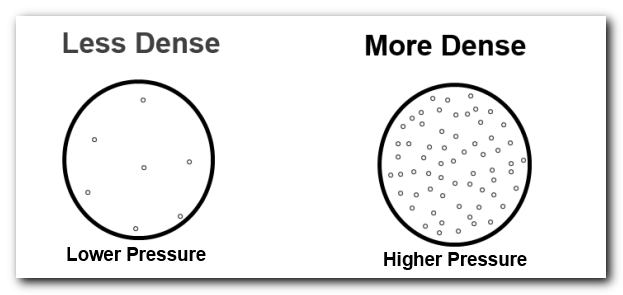
1) Describe density and pressure with units :
The definition of density is the state in which something has a degree of compactness of an object or some sort of substance. Density can be calculated with Mass (m) and Volume (v), as in… (density number g/cm3) Pressure how ever is like a physical force in which is removed on or against an object, in which you may have contact with. Pressure is related to force, and the unit for pressure is Pa, and to calculate it, you must divide force by area, its meter-kilogram-second (MKS.) Also, the less dense an object is, lower the pressure, and the more dense the object is, the higher the pressure is included.
Image result for density and pressure

2) Describe how friction can be both helpful and unhelpful:
Friction can be both helpful because cars or vehicles that we have now wouldn’t be able to move along the ground or road, and the brakes of the car wouldn’t allow you to stop the car. Friction can be unhelpful when we are trying to push something very heavy along somewhere we need it to.

Image result for friction


3) State Newton’s Laws of Force and Motion:
Law 1: Objects at rest sustains (it is stationary), and objects in motion sustains in motion
Law 2: Acceleration of an object is dependent upon two variables.
Law 3: Every action is equal to an opposite reaction.
Image result for newton

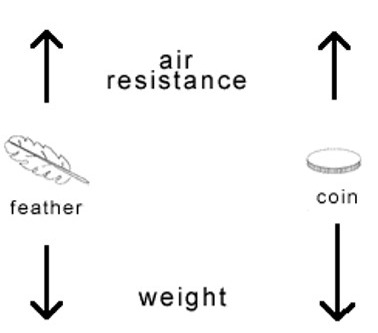
4) Explain why objects do not fall at the same rate:
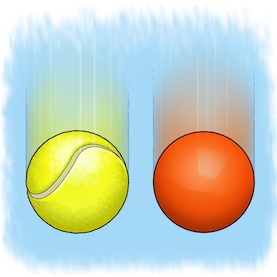
Objects don’t fall at the same rate because they have a difference within them, such as a difference in mass, force and acceleration which makes it much heavier or lighter, and the acceleration will increase in which is dependent upon its weight, and the resistance of air when the object is falling would be decreased, which is also dependent on Earth’s gravitational pull. Earth has a pull gravitational force of 9.8 m/s2, and the objects will depend on the gravitational pull of Earth upon its own force. Therefore, objects do not fall at the same rate because, basically… everything is “dependent” upon how much weight, mass or force is applied or in the object.
Related imageImage result for objects falling


Tuesday, September 12, 2017

[Social Studies] - "Native Tribe Study Presentation Summary"


Throughout the past few weeks in Social Studies with Ms Robertson, we've been focusing mainly on rain forests, as it is a place in which holds significance of our world. Here is our Native Tribe Study presentation, which was presented by myself, Lennyx, and Kacia. Thank you for visiting my blog, I appreciate it a lot!

Summary Paragraph
As we’ve just finished presenting our native tribe study on the Baka Pygmies, in conclusion, I shall say that the Baka Pygmies are very interesting indeed. They all share their advantages and disadvantages with each other and they are capable of succeeding more in life if they had the essential resources for their cultural survival. In saying that, the Baka Pygmies have a cultural significance upon the rain forest as they are the indigenous people of Central African rain forests. It is a pleasure to study native tribes around the world because I personally have an interest of researching about people that I haven’t or known about that live in our world.
Image result for baka pygmies


Within our presentation, we have mentioned that the Baka Pygmies are nomadic people of Central Africa (along with other Pygmy tribes), which means that they live the life of travellers, travelling from place to place to find fresh pasture for their animals and etc. They are also in large threat of displacement and prejudice as the process of deforestation has taken up their area and now they suffer a severe lack of essential resources for their cultural survival. We’ve also mentioned all the information about who they are or what religions that they have, which is Animism.

Image result for deforestation
Image result for animism religion

To conclude this blog post, the Baka Pygmies are an importance or “significance” towards our world as they help take care of the rain forest that help us develop fresh air or oxygen for our daily activities. As stated on my last blog post about the significance of the rain forest, the rain forest is important to us because it is a place that produces oxygen (O2) and carbon dioxide (CO2), and also the process of photosynthesis was included, and the phenomenal aspects of these processes in the rain forests are from plants/trees and decay in which we use as fossil fuels. Thank you very much for your time!


Thursday, June 8, 2017

[Science]- "Atom & Electronic Configuration"

Image result for atomsGreetings and welcome to my new blog post! Throughout this term (term 2) in Science with Mr Tyagi & Ms Smallwood, we've been learning and discussing about, "atoms" & the "electronic configuration." Mostly about atoms and what they are. I find this unit quite interesting, as it relates to things in life that we may be capable of coming upon it throughout our lives... Here is my definition of what atoms and electronic configuration are. Please feel free to leave a comment down below in the comments section for any advice on what I can do better in the future, I'd appreciate that. Thanks :)


The Structure Of An Atom & The Electronic Configuration:
Atoms are commonly known as the “basic units” of matter, in which is the structure of elements. They consist of three particles known to be, protons, neutrons & electrons. Protons and Neutrons are in the centre of an atom, which is inside the nucleus. Electrons however, are located around the nucleus, in orbits well-known to be called orbital shells or energy shells. Electronic configuration is informed by the particles of atoms, in which you are able to find in an element, example; Sodium has an Atomic Mass of 23, and an Atomic Number of 11, the electronic configuration of this element is 2,8,1.
S.No
Name Of The Element
Symbol
Atomic Mass
Atomic Number
Electronic Configuration
1
Sodium
Na
23
11
2,8,1
Equation:
Atomic Number= Number Of Protons
Mass Number = Protons + Neutrons
Number Of Neutrons = Mass Number= Atomic Number
Number Of Electrons = Number Of Protons = Atomic Number

An atom that is charged is called= iON
Losing electrons= Positive
Gaining electrons= Negative
Sharing electrons= Partial Positive or Partial Negative


Tuesday, May 30, 2017

[Health)- "Why Tobacco is sometimes chewed, and sometimes smoked"

Greetings and welcome to my new blog post! Throughout the term of learning about drugs/alcohol and the affects that they can do, we've been given a task to complete and that is to... reflect back onto the certain drug and find the differences between them. Here is a Google Drawing presentation that I've created which will inform you of the differences between "Chewing tobacco," and "Smoking tobacco." Click the image above to see what I've written in which what I have learnt about tobacco. Thank you for your time!

Friday, April 14, 2017

[DigiTech] - "Sustainability Multi-level Game"


Greetings and welcome to my new blog post! Throughout the weeks of learning, creating and sharing in DigiTech (ICT) with Ms Anderson, we've been focusing on how to create a game using an online game creator named "Scratch." As you may of have seen, I've been blogging what I've been working on during DigiTech based on developing my game. The outcome of our task was to have a Sustainability based game which has multiple levels and here is what I've come up with, my very own game. All the graphic art designs such as the sprites and backdrops were all created by me, scripts how ever... I got the idea of it from another game which has a link to it within Scratch itself. If you're willing to play my game, which you are most welcome to... here are the instructions and a couple of hints listed down below, click on the "Green Flag" to begin the game! Good luck and enjoy :) Thank you for visiting my blog, I appreciate it very much and please leave some feedback if you have any questions about my game...

INSTRUCTIONS:
Use the arrow keys to jump and move left and right.  You can use the down arrow key to dive on Level 3. There is a 60 second time limit to make it through all the levels, so you must hurry! The levels within the game pop up within approximately 4 seconds so be patient. 

HINTS FOR QUESTIONS: 
1. P_ _ _ _ _ _ _ 
2. ANSWER:  Oamaru Creek 
3. 44 divided by 3 + 0.0333333 + 0.20
4. S _ _ _ _ _ _ _ _ _ _ _ _ _ 

Focus: Get to school before your time of 60 seconds runs out. 
Game produced only for audiences over the age of 10, Students @Tamaki College are most welcome to play this game. 

Wednesday, March 29, 2017

[Science] - "Living & Non-Living Things" - (Cells)


LIVING                                                  Non-Living
They are able to grow
They are not able to grow
They are able to breathe
They can’t breathe
They can move on their own
They can’t
They have sensory organs
They don’t unfortunately
They can produce offsprings (reproduce)
They can’t


Livings things are created/made up out of “cells.” They are able to maintain to balance… be stable between two things as of being dependent on each other. Livings things are also able to move, feed, grow, reproduce, excrete waste and also breathe… unlike Non-living things which cannot indeed breathe… for example, a car can’t breathe because they don’t have any organs to produce oxygen. Non-living things are not able to move on their own but Living things are, they don’t have all of these characteristics. It is defined that life uses a body of attribution which living organisms share.


PLANT CELL:                                            ANIMAL CELL:
Screenshot 2017-02-03 at 12.34.46 PM.png
The differences between these two cells “Plant Cell” and “Animal cell” is that there is a total difference in size construction... there are a few difference main structures between these cells, as it concludes the vacuole in the Plant cell and in the Animal cell, it has a more than one. As of animals and plants, they are different but they are still a living thing in life. Plants are able to move around in some cases but not as swiftly animals, it takes quite a long period of time for them to move on their own.


Cell membrane: Very thin transparent sheet that holds everything inside & controls what comes in & out.
Cell wall: Made of cellulose & only found in plants, thick & strong, provides strength for the plant.
Nucleus: Usually a small dark circular spot. The control centre for the cell & contains genes.
Cytoplasm: Watery jelly like substance which fill most of the cell. It holds the cell organelles and contains nutrients & chemicals.
Vacuole: Water filled bubble that helps to keep the cell firm.
Chloroplasts: Small green structures found only in the green part of plants. Makes sugar for the plant.
Mitochondria: The part of the cell that does respiration to give the cell energy.


Specific Learning Outcomes:


Cells


  • Describe the building blocks of living organisms
  • Explain the function of cell structures
  • Distinguish between plant and animal cells
  • Describe how cells are involved in reproduction


Life on Earth - Plants


  • Describe the importance of plants as producers
  • Explain why leaves are called food factories
  • Summarise the process of photosynthesis
  • Describe the adaptations of leaves for photosynthesis


  • List the reasons why water is so important to plants
  • Describe how plants lose water to the atmosphere
  • Explain how roots absorb water from the soil
  • Outline the process which lifts water up a plant


  • Describe the nitrogen cycle and its importance to plant growth
  • Explain how the properties of soil impact on plant growth
  • Discuss the impact of human activity on water and soil quality


Home Work


  1. Differentiate between a car and a cat. Minimum 4 differences.
1. A cat has organs to create oxygen and a car doesn’t
2. The car is made of steel metal and as of a cat, it has smooth fur
3. A cat is able to move on it’s own, it has a system for sensing unlike a car
4. A car needs an automotive battery that is able to be recharged, the cat gets food for energy.


  1. Differentiate between a plant cell & an animal cell
The differences between these two cells “Plant Cell” and “Animal cell” is that there is a total difference in size construction... there are a few difference main structures between these cells, as it concludes the vacuole in the Plant cell and none in the Animal cell. As of animals and plants, they are different but they are still a living thing in life. Plants are able to move around in some cases but not as swiftly animals, it takes quite a long period of time for them to move on their own.


  1. Give functions of...
(I) Cell wall
The function of the cell wall provides strength for the plant.
(II) Cell membrane
This holds everything inside & controls what comes in and out
(III) Nucleus
It contains genes & is the control centre for the cell
(IV) Cytoplasm
It holds the cell organelles and contains nutrients & chemicals.


Unicellular: Those organisms which are made up of single cell are known as unicellular organisms for example “Amoeba.” It consists of an individual cell.


Multi-cellular: Those organisms which are made up of more than one cell are
known as multi-cellular organisms like plants, cat, dog & us.

[Science] - "Reproduction"


Reproduction:
Reproduction is a process in which organisms produce their offsprings.


Reproduction in Plants:
1. What is cutting and drafting?
Humans are able to propagate plants by artificial propagation. Taking cuttings and grafting are the methods of artificial propagation which you need to know. They are a quick way of propagating large numbers of identical plants, so they look the same towards each other.


2. What is a clone?
A clone is a group of cells or organisms which are genetically identical to each other.


3. What are the advantages of asexual reproduction in plants?
  1. Only one parent plant is required
  2. Young plants are identical to the parent, so that good features will always be passed on.

Reproduction is of two types:
Two Types-  Asexual & Sexual:
1. Asexual reproduction:
In this type of reproduction only one organism (parent) or part is required and new organism is produced like unicellular organisms.


2. Sexual reproduction:
In this type of reproduction two organisms (male & female) takes part and new organisms are formed like in all multi-cellular organisms.

Asexual reproduction is found in plants and animals.


Vegetative propagation: It is a type of asexual reproduction in which any part of the organism develops into a new organisms like budding & fragmentation.


In plants stem, leaf or root develops into a new plant for example… stem in mint, onion & potato can grow into a new plant.


Vegetative propagation in plants is used to produce high yielding and better quality of fruits & vegetables.


In animals sometimes they reproduce by fragmentation for spore formation where only single organism produces new organism.


1. Brief definition of "Reproduction"
The definition of reproduction is the action or process of creating another form of something, as in duplicating or copying of the same form. Example; Human beings make youngs which are “babies”, Animals such as cats create another form of itself which we call “kittens.” That is the outcome of reproduction. Reproduction is when new organisms are generated, it is the process of species continuation of it’s existence. There are two means of reproducing such as Asexual and Sexual.  


2. What is sexual & asexual reproduction?


Sexual Reproduction:
A type of reproduction that is needed of two individuals of different gender (sexes) combining to form another individual. Does not involve sex cells or gametes


Asexual Reproduction:
A type of reproduction in which the fusion of gametes is not included, so it’s not needed. Offspring arises, as an individual is formed from a single organism. It is the formation of a new individual from the cell of a single parent.


3. Give examples of asexual reproduction in plants & animals:
Animals= reproduce sexually by gametes that are produced that join in fertilisation. Plants= reproduce asexually through the roots such as corns and stem tubers. Some plants can produce seeds without fertilisation, where the ovule or ovary gives rise to new seeds it self.


4. Give example of sexual reproduction in plants & in plants & animals:
Plants= reproduce sexually through flowering plants, in which has organ like genetics within the flower, which is The Carpels and The Stamen.
Animals= reproduce asexually through fission, budding & fragmentation.


5. What are the advantages & disadvantages of asexual reproduction?
Advantages:
It promises reproduction and is able to create individuals very fast and comes in large amount. Because there’s no more sexual reproduction, you don’t need sperm nor egg.


Disadvantages:
For the male gamete to meet the female gamete, it needs water, because of an asexual reproduction it is not needed. An asexual reproduction, population intends to be genetically static. Because they're all the same - having all the same characteristics, for example; a plant can only withstand about 7 degrees for them to be able to live, if the temperature goes less than 7 degrees, they will die.


6. What are the advantages & disadvantages of sexual reproduction?
Advantages:
Characteristics are inherited from two parents. This  variation in the offspring. In changing the environment, this gives a good chance of at least a few to survive, for example; diseases and etc. Not all of them will die but the ones that are able to cope with the climate changes, they are most likely to survive. So like, the ones that had survived, they have the tolerance.


-Seeds/fruit are formed and is allowed for long distance dispersal


Disadvantages:
If there are too much variation prevents close adaptation to any given environment, which produces large numbers of gametes and is wasteful since a lot of them will die in stressful environments. The offsprings that inherit the genes who can’t tolerate, they are most likely to not survive.


  • Characteristics are inherited from two parents - this produces variation in the offspring;
  • This gives a good chance of at least a few surviving diseases, changes of climate, etc.
  • “Jack of all trades, Master of none.”
Defines those who are good at a lot of things and those who aren’t.


Questions On Reproduction:
Look at the picture of a grass flower...
Grass flower with labelled structures - feathery stigma which hangs outside the flower, and the stamen which consists of the anther, held up by a long filament.
(a) Is this flower insect or wind pollinated?
Answer: Wind pollinated


(b) Name a structure which is absent or not labelled on this flower which would be significant in flowers which use the other method of pollination.
Answer: Large colourful petals/nectary


(c) Choose one feature of the stamen, and one feature of the stigma which are shown on the diagram and explain how each feature helps with the plant’s method of pollination.
Answer: The stigma is feathery in shape. This gives it a very large surface area for catching pollen grains blowing in the wind. It is also hanging outside the rest of the flower so that it is in the best place to catch drifting pollen. The anther is large and hangs outside the flower. This means that it can produce lots of pollen and that it will be efficiently released into the air.


(d) Name a plant which reproduces asexually by means of runners and give a brief description of how this is achieved…

Answer: Strawberries. Runners are side shoots which grow out from the parent plant and form buds at points along the runner; the buds form roots and grow into new plants.