Pages

Showing posts with label Mr Tyagi. Show all posts

Monday, September 18, 2017

[Science] - "Define & Calculate: Density and Pressure"

Image result for science
Throughout the past few weeks in our Science class with Mr Tyagi, we've been learning all about motion. As known, Newton's laws of motion were discovered to be true or accurate, and was carried out through generation to generation, and now we've learnt the ways of motion. In the past lessons, we've learnt about acceleration, mass, force and weight. Today's lesson, we've covered density and pressure, and here a few questions I've answered down below. Thank you very much for visiting my blog, I appreciate it a lot!


[Define & Calculate] Density and Pressure:

1) Describe density and pressure with units :
The definition of density is the state in which something has a degree of compactness of an object or some sort of substance. Density can be calculated with Mass (m) and Volume (v), as in… (density number g/cm3) Pressure how ever is like a physical force in which is removed on or against an object, in which you may have contact with. Pressure is related to force, and the unit for pressure is Pa, and to calculate it, you must divide force by area, its meter-kilogram-second (MKS.) Also, the less dense an object is, lower the pressure, and the more dense the object is, the higher the pressure is included.
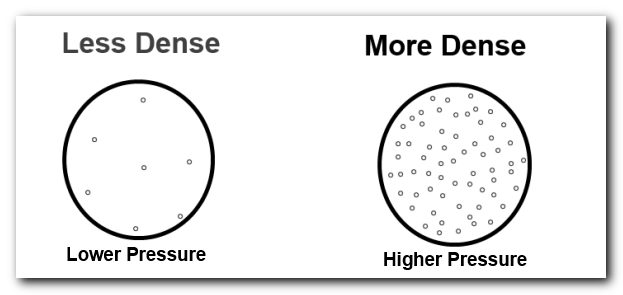
Image result for density and pressure

2) Describe how friction can be both helpful and unhelpful:
Friction can be both helpful because cars or vehicles that we have now wouldn’t be able to move along the ground or road, and the brakes of the car wouldn’t allow you to stop the car. Friction can be unhelpful when we are trying to push something very heavy along somewhere we need it to.

Image result for friction


3) State Newton’s Laws of Force and Motion:
Law 1: Objects at rest sustains (it is stationary), and objects in motion sustains in motion
Law 2: Acceleration of an object is dependent upon two variables.
Law 3: Every action is equal to an opposite reaction.
Image result for newton

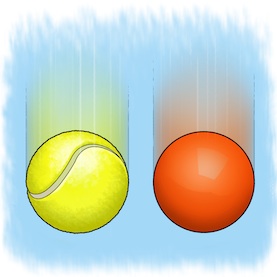
4) Explain why objects do not fall at the same rate:
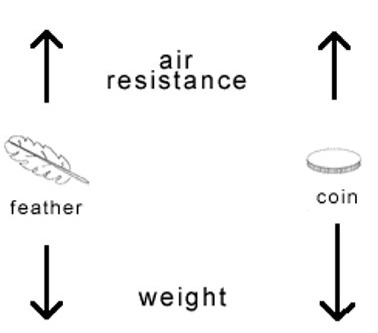
Objects don’t fall at the same rate because they have a difference within them, such as a difference in mass, force and acceleration which makes it much heavier or lighter, and the acceleration will increase in which is dependent upon its weight, and the resistance of air when the object is falling would be decreased, which is also dependent on Earth’s gravitational pull. Earth has a pull gravitational force of 9.8 m/s2, and the objects will depend on the gravitational pull of Earth upon its own force. Therefore, objects do not fall at the same rate because, basically… everything is “dependent” upon how much weight, mass or force is applied or in the object.
Related imageImage result for objects falling


Wednesday, June 28, 2017

[Science] - "(Polymers) Alkanes"

Alkanes:
  • A saturated hydrocarbon family:
            (saturated means all the bonds around the Catom are already occupied)

  • Suffix is  -ane (added at the end)
  • General formula: CnH2n+2
  • Single bond between C Atoms C-C


Number Of
C Atoms
Name Of Alkane
Molecular Formula
(CnH2n+2           
n= number of C atoms)
Structural Formula
Condensed
Expanded
1
Methane
C1H2 (1) + 2       CH4
(2 x 1= 2) + 2= 4
CH4
2
Ethane
C2H2(2) + 2       C2H6
(2 x 2= 4) + 2= 6
CH3-CH3
3
Propane
C3H2(3) + 2       C3H8
(3 x 2= 6) + 2= 8
CH3-CH2-CH3
4
Butane
C4H2(4) + 2       C4H10
(4 x 2= 8) + 2= 10
CH3-CH2-CH2-CH3
5
Pentane
C5H2(5) + 2       C5H12
(5 x 2= 10) + 2= 12
CH3-CH2-CH2-CH2-CH3
6
Hexane
C6H2(6) + 2       C6H14
(6 x 2= 12) + 2= 14
CH3-CH2-CH2-CH2-CH2-CH3
7
Heptane
C7H2(7) + 2       C7H16
(7 x 2= 14) + 2= 16
CH3-CH2-CH2-CH2-CH2-CH2-CH3
8
Octane
C8H2(8) + 2       C8H18
(8 x 2= 16) + 2= 18
CH3-CH2-CH2-CH2-CH2-CH2-CH2-CH3
9
Nonane
C9H2(9) + 2       C9H20
(9 x 2= 18) + 2= 20
CH3-CH2-CH2-CH2-CH2-CH2-CH2-CH2-CH3
10
Decane
C10H2(10) + 2       C10H22
(10 x 2= 20) + 2= 22
CH3-CH2-CH2-CH2-CH2-CH2-CH2-CH2-CH2-CH3

Monday, June 19, 2017

[Science] - "Fashioned For You: Metals & Nonmetals"

Fashioned For You

Image result for metals


1) Differentiate between metals and nonmetals in terms of Physical and Chemical properties:
Physical Properties (Metals)
Chemical Properties (Nonmetal)
Heavy
Reactive
Good conductors of heat & electricity
Tend to lose electrons easily and form ions that are charged positively
Lustrous (shiny)
Forms of elements such as Sodium and etc
High melting point
Dull (Not shiny)
Can be hammered
Soft
Can be drawn into wires
Brittle (breaks easily into smaller pieces)
Usually solid at room temperature
Low density (light)
Opaque (Can’t see through it)
Low melting points

2) Relate the metals to it’s uses:
Iron:
Iron is a chemical element and metal. Steel is a well known and commonly used alloy made from iron and a small amount of carbon (or sometimes other elements.) Iron is relatively cheap to produce and has a large number of different uses. Machines, vehicles and building structures are commonly built from iron (usually in the form of steel.)

Gold:
Gold is a chemical element. Compared to other metals, gold is less chemically reactive. There is a system in which is called ‘gold standard’ which fixes a unit of money to a certain weight of gold. Injectable gold has been proven to help reduce pain and swelling in patients suffering from various diseases such as tuberculosis and rheumatoid arthritis.  

Silver:
Silver is a chemical element. It is a soft and shiny metal that has been used for many years to make fine pieces of jewelry, coins, utensils and various pieces of art. It is also precious indeed. In modern times, silver is also used in dentistry, electronics, photography, mirrors and in number of industrial applications that make use of its unique properties.

Reference:
Science Kids, (July 8 2016) Metal Facts. Retrieved from:


3. Describe how alloys are made and discuss the importances:
Alloys are found in various sorts of things including dentistry (teeth fillings), jewelry, door locks, musical instruments, coins, gun and etc. Alloys are metals combined with other substances in order to make them better in some way. However, some people think that the term ‘alloys’ defines the mixture of metals, well the actual definition of alloys are materials made up of at least two different chemical elements, one of which is a metal.

Reference:
Eagle, A. (July 8 2016) What are alloys? How are they made?


Second Part Of Science 10                  Fashioned For You:

Properties of Metals
1.         Have lustre - shiny
2.         Opaque -light cannot pass through it:
3.         Hard
4.         Strong
5.         hard-wearing – last long
6.         malleable – can be hammered into shapes
7.         ductile – can be drawn into wires
8.         good conductor of heat
9.         good conductor of electricity
10.     sonorous – produce ringing sound when hit
11.     usually solid at room temperature
12.     high density – usually heavy
13.     form basic oxides
14.     high melting point
15.     ions of metals have positive charges


Properties of Nonmetals:
1.         Dull – not shiny
2.         Soft
3.         Brittle – breaks easily into smaller pieces
4.         Low density – light
5.         Poor or non-conductor of heat and electricity
6.         Usually liquids or gases
7.         Low melting points
8.         Form acidic oxide
9.         Some ions have negative charges, others are neutral.