Throughout the past few weeks in our Science class with Mr Tyagi, we've been learning all about motion. As known, Newton's laws of motion were discovered to be true or accurate, and was carried out through generation to generation, and now we've learnt the ways of motion. In the past lessons, we've learnt about acceleration, mass, force and weight. Today's lesson, we've covered density and pressure, and here a few questions I've answered down below. Thank you very much for visiting my blog, I appreciate it a lot!
[Define & Calculate] Density and Pressure:
1) Describe density and pressure with units :
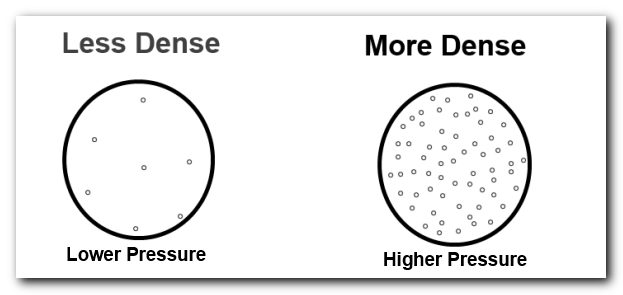
The definition of density is the state in which something has a degree of compactness of an object or some sort of substance. Density can be calculated with Mass (m) and Volume (v), as in… (density number g/cm3) Pressure how ever is like a physical force in which is removed on or against an object, in which you may have contact with. Pressure is related to force, and the unit for pressure is Pa, and to calculate it, you must divide force by area, its meter-kilogram-second (MKS.) Also, the less dense an object is, lower the pressure, and the more dense the object is, the higher the pressure is included.
2) Describe how friction can be both helpful and unhelpful:
Friction can be both helpful because cars or vehicles that we have now wouldn’t be able to move along the ground or road, and the brakes of the car wouldn’t allow you to stop the car. Friction can be unhelpful when we are trying to push something very heavy along somewhere we need it to.

3) State Newton’s Laws of Force and Motion:
Law 1: Objects at rest sustains (it is stationary), and objects in motion sustains in motion
Law 2: Acceleration of an object is dependent upon two variables.
Law 3: Every action is equal to an opposite reaction.

4) Explain why objects do not fall at the same rate:
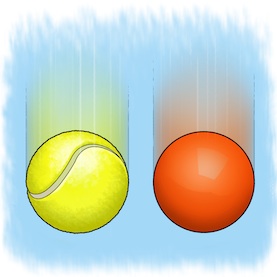
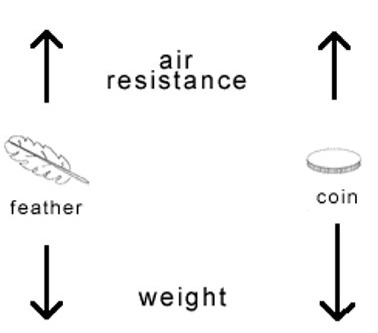
Objects don’t fall at the same rate because they have a difference within them, such as a difference in mass, force and acceleration which makes it much heavier or lighter, and the acceleration will increase in which is dependent upon its weight, and the resistance of air when the object is falling would be decreased, which is also dependent on Earth’s gravitational pull. Earth has a pull gravitational force of 9.8 m/s2, and the objects will depend on the gravitational pull of Earth upon its own force. Therefore, objects do not fall at the same rate because, basically… everything is “dependent” upon how much weight, mass or force is applied or in the object.



 Greetings and welcome to my new blog post! Throughout last term and also this term (last couple of weeks), in our Optional Art class with Mrs Telefoni, we've been learning and designing a phenomenal piece of artwork. This artwork consists of our personal interests, surroundings & family/friends. We've looked into the technique that is used to create the artwork piece, and the technique used is carving and inking. We also looked into the placement of images, such as the Foreground, Midground and of course, the Background. . I was not told the proper technique or method, but those are the different processes we've gone through. The first thing we had to do was research images in which you are either interested in or the other topics above. The next step was to create a draft image to display what your final design is going to be... consisting of the topics you've chosen. After that... we began looking into the carving process, and we had to think about the "Negative & Positive sides", which was a big challenge for me at first. As of the process that I'm currently working on at the moment is waiting for my ink compressed image to dry up so that I am able to paint it. So that's the next process... "painting." Stay tuned to see my finished design, and thank you very much for visiting my blog!